
What Wayne County Deed Records Actually Record
| Instrument | Recorded function | Research use |
|---|---|---|
| Warranty deed | Conveys an interest with deed warranties | Identify an acquisition in the chain |
| Quitclaim deed | Conveys whatever interest the grantor holds | Track an interest released or name changed |
| Executrix’s or trustee’s deed | Records a fiduciary or trustee transfer | Follow an estate or foreclosure process |
| Tax deed | Records a tax-related conveyance | Verify whether a tax-sale lead produced a deed |
| Correction instrument | Clarifies a prior recording | Read with the referenced original |
The Wayne County Chancery Clerk keeps the official land records. These include deeds, deeds of trust, mortgages, mineral leases, plats, and related instruments. Each instrument does different work. A deed conveys an interest in land. A deed of trust secures a debt. A release discharges a recorded claim. Read the instrument type and the full text before drawing conclusions from a name result.
Wayne’s Land Index Reports an 1882 Starting Lead
The oldest-file endpoint reports January 5, 1882. That is the earliest indexed deed date. It does not guarantee that every later record is indexed or imaged, because converted instrument types, incomplete descriptions, spelling variations, and unscanned pages can all break a chain search. For anything earlier or missing, contact the Chancery Clerk at 609 Azalea Drive, Waynesboro, or 601-735-2873 and request the deed book, reverse index, image, or microfilm reference. The office also answers copy questions at chanceryclerk@waynecountyms.gov.
Note: The portal date marks an online lead, not verified page-by-page digital coverage from 1882.
Search Wayne Chancery by Party, Instrument, and Land
| Control group | Fields available | Best use |
|---|---|---|
| Party | Search All, Grantee, Grantor, matched name, full name | Separate acquisitions from conveyances |
| Date | Begin/end; last 7, 30, or 90 days | Bound a common name or find recent filings |
| Instrument | Type, volume, location, book/page, number | Isolate or retrieve a known recording |
| Legal | Description, subdivision, lot/block, section-township-range, quarters | Tie a party result to the tract |
| Address/ID | Street, number, parcel, PPIN, patent | Test assessor clues against land records |
Wayne's instrument filter covers plats, deeds of trust, releases, judgments, liens, mineral and timber instruments, substitute deeds, lis pendens, and tax deeds. A warranty-deed-only pass can miss a critical filing. Recorded consideration is not assessed value. The portal also offers consideration filters, and the official Wayne search screen shows every option before you prepare name variants.
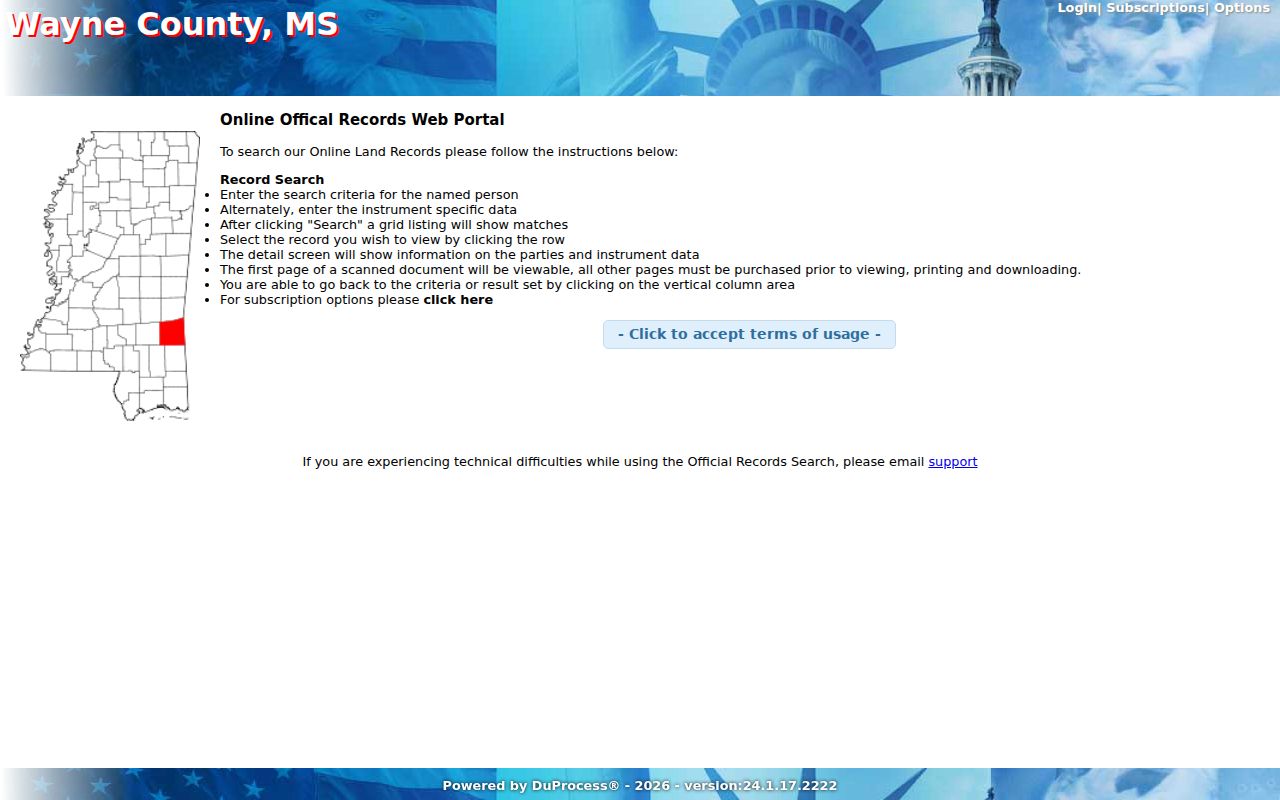
The controls work together. Dates, party direction, instrument categories, and legal fields combine to turn a broad name query into a reproducible Wayne County deed search.
Walk the Wayne County Grantor-Grantee Chain
Start with the most recent credible ownership instrument, not simply the first same-name hit.
- Use the assessed owner and legal description as leads; find that party as grantee on an acquisition deed.
- Copy grantor, grantee, filing date, description, instrument number, book/page, and prior reference from the complete deed.
- Search that grantor as grantee in an earlier period and confirm that the tract continues to match.
- Repeat backward, including corrections, estate instruments, plats, and related references.
- When online coverage breaks, request the reverse index and deed books at the courthouse.
- Grantor
- The party conveying the stated interest.
- Grantee
- The party receiving the stated interest.
- Chain of title
- The linked sequence of instruments affecting the same land.
- Book/page
- A volume-and-page recording location.
- Instrument number
- A distinct filing identifier for precise retrieval.
A 2025 Assignment Explains the Index Vocabulary
Consider a January 2, 2025 index row. It was an Assignment of Deed of Trust. The row carried instrument number 202500001, a Verified and Original status, two pages, and a pointer to related instrument 308. Legal and address fields stayed empty. A mortgage assignment can name a nominee or financial institution without conveying any land. Follow the related instrument. Confirm its document type and match the legal description before placing the row in an ownership narrative. Keep the page count. The clerk can pinpoint the intended filing faster with those details when party names are abbreviated and the public row lists no address.
Wayne Legal Descriptions Mix Record Languages
Wayne legal descriptions mix several record languages. One appraisal card combines WAYNESBORO PT LOT 5 BLK 42 S12, Township 8 North, Range 7 West, and book 110 page 89. Copy every abbreviation exactly. Lot-and-block language points to a plat, while section-township-range narrows the public-land-survey location and book and page points to another recording. The subdivision lookup includes Eastwood, Oak Park Manor, Oakwood, Willowbrook, and Woodlawn, but a dropdown label is only a clue until the plat confirms it. A parcel number just indexes the tax roll. It never replaces the deed's legal description.
A Wayne County deed can describe land in several languages. Lot-and-block descriptions point to a named plat. Pull that plat and look for amendments, re-subdivisions, easements, and street vacations. Amendments matter. Metes-and-bounds deeds are different. Copy the calls, monuments, bearings, distances, adjoining owners, and survey references exactly as the recorder received them. Small wording changes can shift a boundary. Section-township-range narrows the public-land-survey location. Orientation helps, though. The appraisal map and the GIS polygon can help you picture a Wayne County parcel. But neither modifies the recorded description or substitutes for a licensed boundary survey.
Wayne's index vocabulary also flags records beyond the ordinary deed sequence. The portal offers categories for 16th Section leases, mineral conveyances and leases, timber deeds, powers of attorney, UCC filings, construction liens, federal judgments, and deeds in lieu of foreclosure. Pick the category that fits the question. When a question turns on access, minerals, timber, signing authority, or a secured interest, search the matching category rather than land deeds alone. Read referenced instruments together. A release or assignment may describe only the interest it changes.
Eastwood Notices Require a Later-Deed Check
Eastwood First Addition foreclosure notices carry useful search keys. Each recent notice lists a lot-and-block description, a deed-of-trust instrument number, and a September 11, 2026 scheduled sale date. Those keys open doors. Search the cited deed of trust, its assignments, substitutions, releases, and any later trustee's deed. A scheduled sale is not a completed sale. Never treat it as finished without a later recorded instrument or clerk confirmation.
Apply the same discipline elsewhere. The Mississippi Secretary of State's tax-forfeited inventory offers county, parcel, PPIN, assessed-owner, legal-description, and section-range fields that can surface a tract. Its map, application, auction, and payment screens reveal status. None of those screens proves a conveyance closed, an occupant changed, or title cleared. Go back to the Wayne Chancery index. Look there for a tax deed, a tax-sale release, or a later corrective instrument, and compare the recorded legal description instead of trusting an inventory marker.
Historic Wayne Research Continues at MDAH
The MDAH Wayne County finding aid opens a wider door into Wayne County deed records research. It covers material from 1879 through 1947. The state archives hold more than deeds. Early tax rolls, court files, and 1980 ownership maps sit alongside them. The MDAH Media Room offers a microfilm path for digging deeper. The online property search sometimes falls short on a name or a landscape clue. These collections often close the gap.
Archive tax lists and ownership maps corroborate a chain. They do not replace the deed books themselves. Note the exact series, box, and item, and decide whether the entry is an image, an index, or a manuscript. Then return to the Chancery deed for the operative language. The Waynesboro-Wayne County Library rounds out the picture with local-history material on roads, cemeteries, and family names.
The state catalog's Wayne entries span 1818-1841 combined material. They also include an 1842 land entry, later personal-property entries, and an 1873 land item. The finding aids point to 1851 tax orders and lists. They also cover 1859 tax levies, early court records, and those 1980 ownership maps. Such dates can test whether a surname or landholding appears in a given period. Still, the catalog establishes no continuous deed-book run. Ask MDAH about format and access conditions, and ask Chancery for the matching book or microfilm roll.
Local history collections help where a reverse index stumbles. Cemetery, church, family, road, and community sources can separate two people with near-identical names or explain an obsolete place label. Treat that material as a hypothesis generator. The proof step stays the same. It requires a recorded deed, probate instrument, court decree, or plat tied to the same legal description.
Obtain a Wayne County Deed Image or Certified Copy
Web Inquiry lets anyone view a first page. Later pages require purchase. A first page may leave out the full legal description, signatures, exhibits, or riders. The portal does sell official records, though it posts no current image price or certified-copy fee.
For online retrieval, keep the instrument number, book and page, filing date, parties, type, page count, verification status, and related reference handy. Counter, telephone, email, and mail service all work too. Give the Chancery Clerk those details, ask whether inspection, a plain copy, or a certified copy is available, and request a fee estimate. A focused request under the Mississippi Public Records Act can name the record and the preferred format.
Precision pays off. Name the grantor and grantee, the recording date, the instrument number, book and page, document type, parcel or PPIN, and any related instrument. Ask whether the copy includes every page, exhibit, rider, legal-description attachment, and certification page. Email attachments are not always available. If not, request an inspection or paper-copy estimate. The Clerk's official page states that land records are open to inspection, and that the Clerk or a deputy should show or copy them upon request.
Certified and informational copies serve different purposes. A downloaded or plain image usually works for research notes and for locating the next link in a chain of title. A certified copy carries the custodian's certification. Formal proceedings may require it. Neither copy resolves the legal effect of the instrument. Preserve the source, retrieval date, and certification status so a later reader knows exactly what the record is.
Recorded does not mean guaranteed. Wayne County deed records show what reached the recording office; an index row or incomplete image is not a title opinion and may not disclose every claim.